In large-scale concerts, it’s common to see thousands of light sticks changing colors in perfect synchronization. This is not a coincidence, but the result of a carefully designed light stick control system.
This article explains how concert light sticks work and the key components behind their control systems.
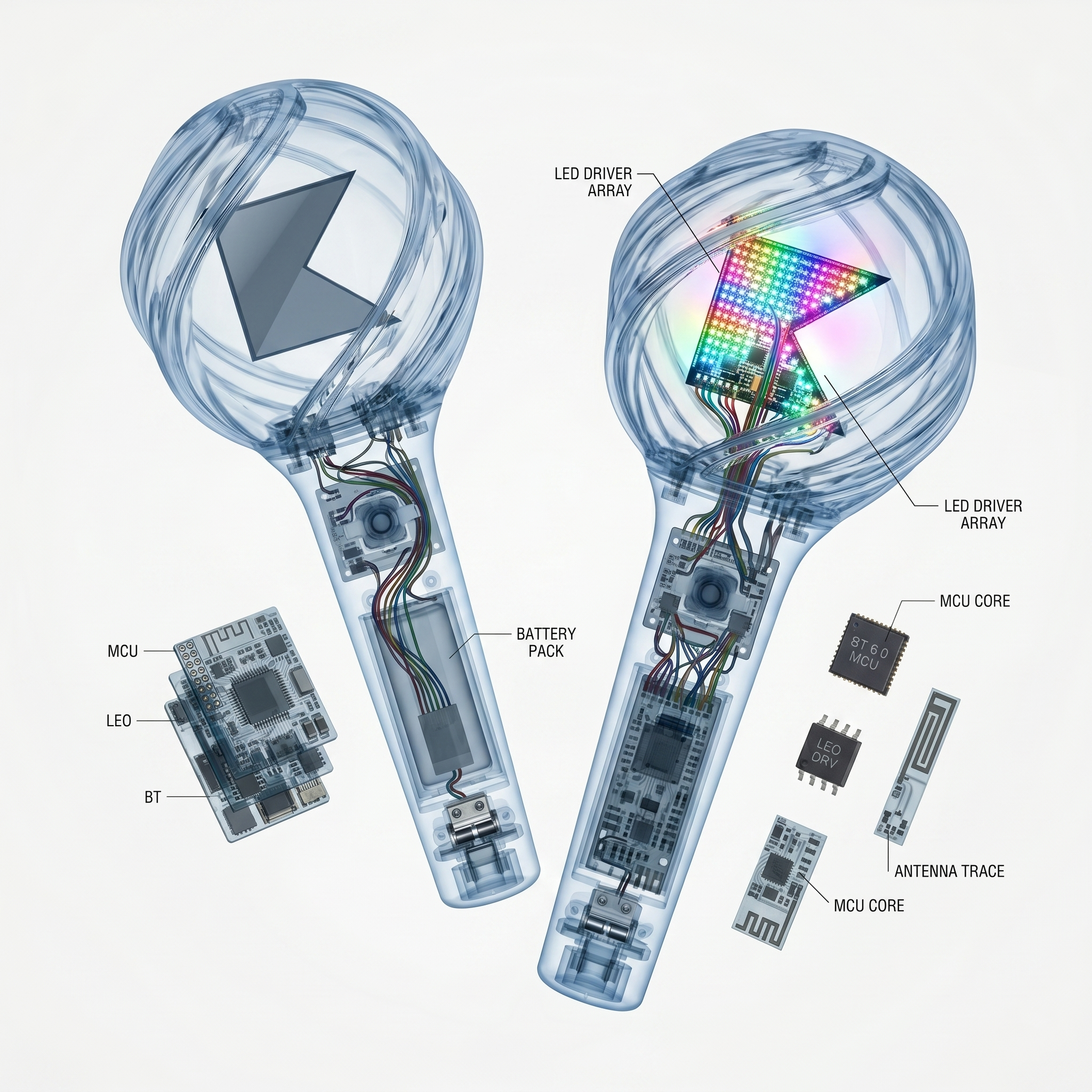
Basic Structure of a Concert Light Stick
A concert light stick consists of several key components working together.
Inside the device, there are LED lights responsible for producing illumination and color. These LEDs can change colors based on instructions.
A control circuit processes commands and manages the behavior of the lighting system.
A power source, typically batteries, allows the device to operate throughout the event.
In advanced models, a signal receiver is included to receive data from a central control system.
What Is a Light Stick Control System?
A light stick control system is a system used to coordinate large numbers of light sticks simultaneously. It can control color changes, blinking patterns, and lighting effects across an entire venue.
This system ensures that all light sticks operate in sync, creating a unified visual experience.
How the Control System Works
The process begins at a central control unit, where lighting patterns are designed. This includes defining colors, transitions, timing, and effects that match the performance.
Once commands are generated, signals are transmitted to all light sticks in the venue.
Light sticks equipped with receivers detect these signals and adjust their lighting accordingly, resulting in synchronized effects across the entire audience.
Technologies Used in Light Stick Systems
Concert light stick systems use various communication technologies.
Radio frequency allows signals to cover large areas efficiently.
Bluetooth may be used in systems that require localized or smaller-scale control.
Some systems rely on proprietary technologies designed specifically for high-precision synchronization in large venues.
Why Synchronization Matters
Synchronization transforms the audience into an active part of the performance.
When lighting effects match the rhythm of the music or key moments in the show, it creates a powerful and immersive experience.
This is one of the defining features that sets large-scale concerts apart from standard events.
Difference Between Standard and Controlled Light Sticks
Standard light sticks are operated manually by users, such as turning lights on and off or changing colors individually.
Controlled light sticks receive commands from a central system, allowing for coordinated and complex lighting effects that cannot be achieved manually.
This makes controlled light sticks ideal for professional, large-scale productions.
What Is Required for Real-World Implementation
Using a light stick control system requires both technical setup and event planning.
Signal transmission equipment must be installed throughout the venue, and the system must be tested before the event.
A dedicated technical team is often needed to monitor and manage the system during the show to ensure smooth operation.
Understanding Light Stick Systems in Concerts
Concert light sticks are not just lighting devices—they are part of an integrated system designed to enhance the audience experience.
Understanding how these systems work allows you to plan more effectively and choose the right technology for your event.
Looking for a Concert Light Stick System?
If you are planning to use synchronized light sticks in your event, our team can provide consultation and system design tailored to your project.