For independent artists, indie bands, or rising music labels, releasing a physical CD album or deluxe boxset is a landmark milestone. It serves as an archive of creative success and a high-value item that dedicated fans want to collect. However, physical album production involves multiple moving parts across audio engineering and multi-layer print assembly. To ensure your first release runs smoothly without facing quality issues or fan returns, cross-check these four critical production requirements.
1. Audio CD Mastering & Replication Standards
-
Audio Preparation: Source tracks must undergo a dedicated pre-mastering pass calibrated specifically for physical CD audio playback. Deliver files to your manufacturer in uncompressed 16-bit/44.1kHz stereo .WAV formats to preserve optimal dynamic range and sonic clarity.
-
Disc Manufacturing Methods: For commercial volumes (500 to 1,000+ units), choose CD Replication (glass mastering and physical stamping) over desktop CD duplication (burning). Replicated discs offer superior data longevity and hardware compatibility. Ensure disc-face artwork uses industrial Offset or Silk Screen printing to prevent paint peeling.
2. Photobook Specifications
-
Enforce CMYK Color Space: All photography assets, artist portraits, and layout graphics must be explicitly converted to a CMYK color profile before file export. Never submit files in RGB format, as digital-to-print conversion causes major color shifts and loss of saturation.
-
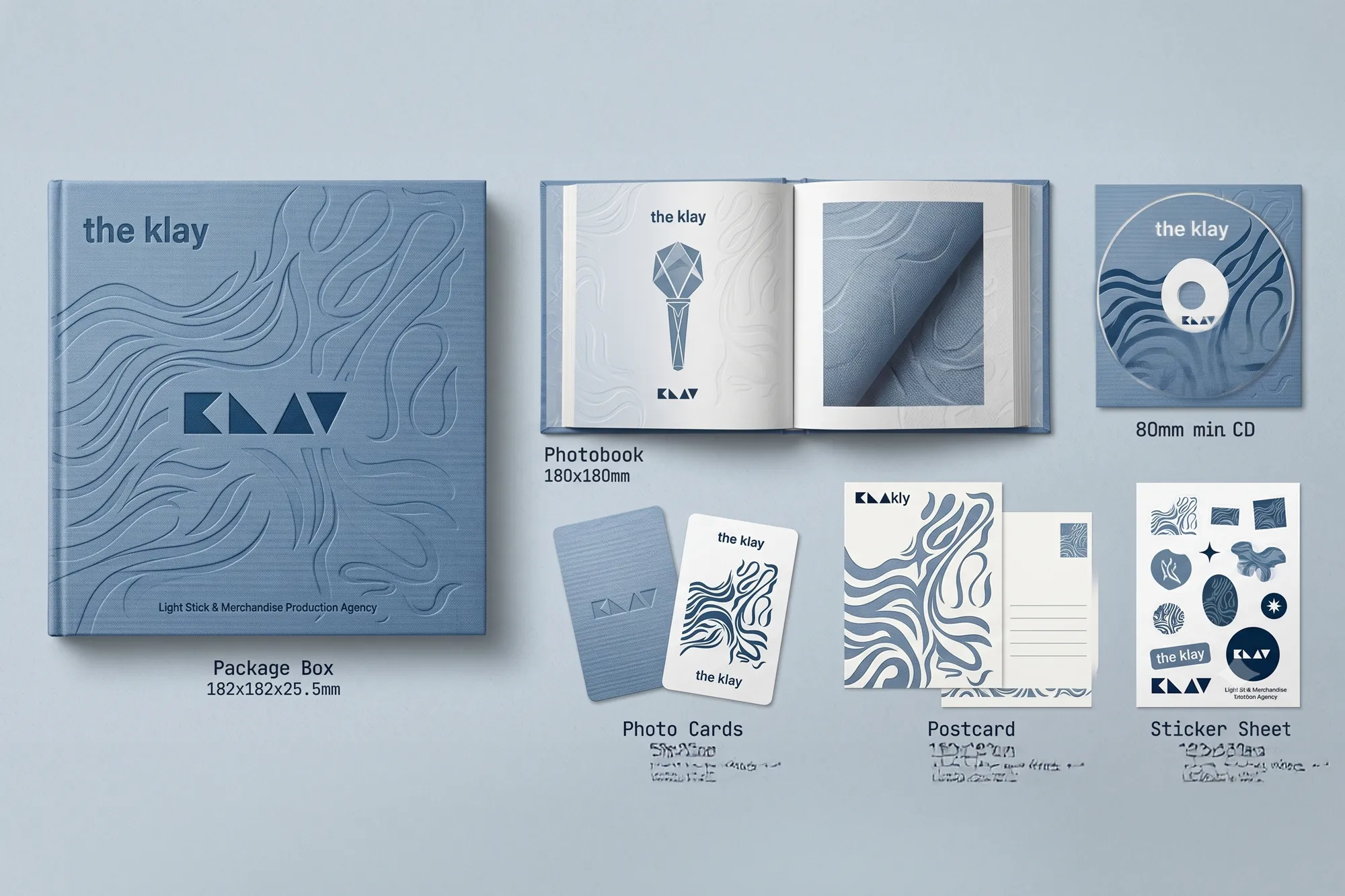
Binding Styles: For thick, high-page-count photobooks, specify Thread-Sewn Perfect Binding. This technique uses structural thread stitching along the spine before gluing, ensuring pages never detach. This allows fans to open the book flat to enjoy wide, panoramic artist spreads.
3. Rigid Boxset Outer Packaging
-
Rigid Box Engineering: For premium boxset presentations, specify thick Rigid Packaging (Greyboard/Chipboard construction) wrapped in custom-printed art paper. This provides excellent structural protection that resists crushing during transit.
-
Internal Dimension Calculations: Maintain a safety clearance tolerance of 2–3 mm on all internal axes. This ensures that the photobook, jewel case/CD tray, and bonus collectibles (stickers, photocards) fit smoothly inside the box without being too tight or rattling loosely.
4. Bleed Lines and Layout Safety Margins
Ensure all design artwork files include a minimum 3 mm bleed margin across all outer edges. Position critical text typography and artist faces well within the designated interior safety zone. This prevents key visual elements or text from being clipped by industrial cutting blades during final trimming.
Launch your next music release with international production standards.
Let The Klay Entertainment act as your production consultant. We audit audio manufacturing plants, cross-check print specifications, and manage your album build from initial prototyping to final delivery.